USDT Betting Platform Licensing: What Curaçao and Other Licences Mean for Punters
 Available in AU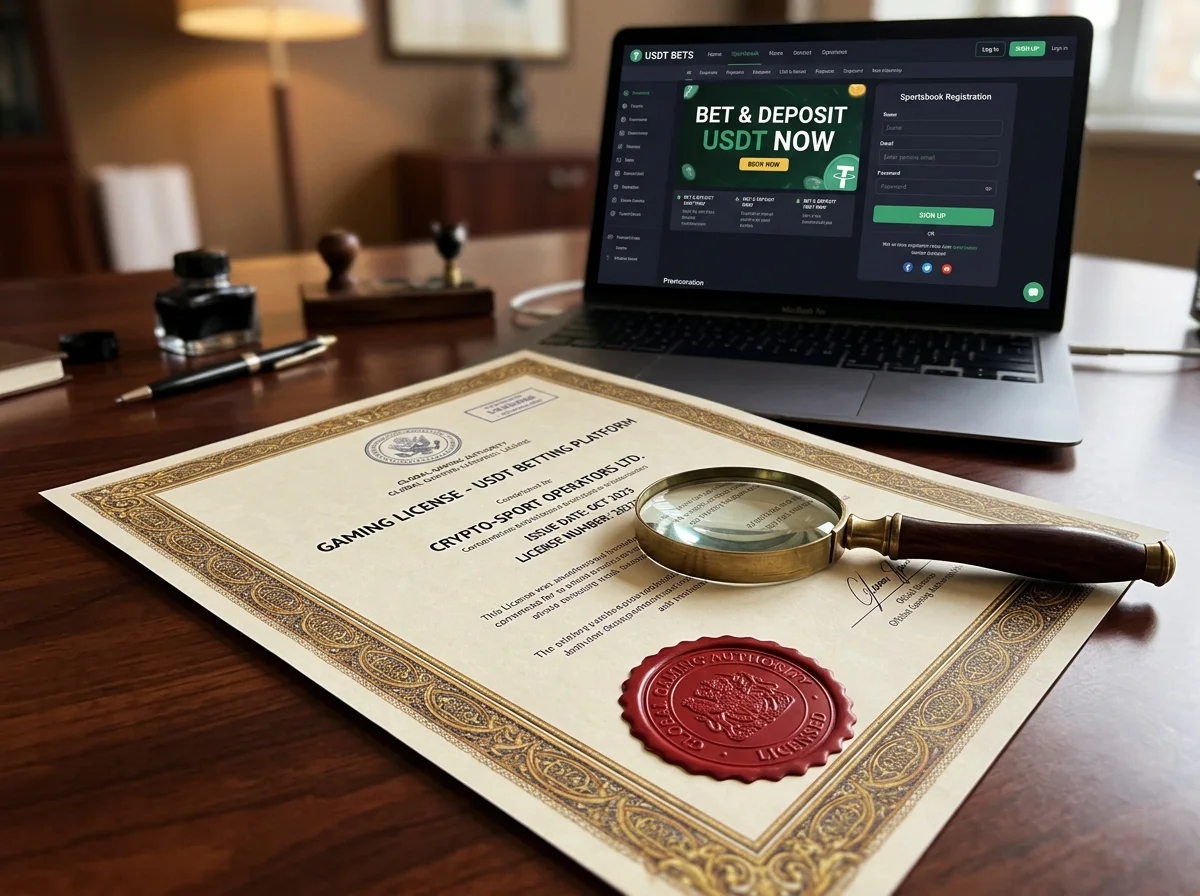
I made my first USDT deposit at a sportsbook that displayed a licensing badge in its footer. Six months later, I tried to verify that licence number on the regulator’s website and discovered it did not exist. The badge was a graphic, not a credential. That experience taught me to verify before I deposit, and it is a lesson that applies to every USDT bettor operating in the offshore space.
Licensing in the crypto sportsbook world is not what most Australian punters expect from their experience with domestically regulated bookmakers. The jurisdictions that licence offshore USDT platforms — Curaçao, Malta, Kahnawake, Anjouan — vary dramatically in the standards they impose, the enforcement they apply, and the player protection they deliver. Understanding these differences is not academic — it determines how much recourse you have if something goes wrong.
Types of Licences at USDT Sportsbooks
By 2025, stablecoins comprised roughly 58% of all crypto deposits at casinos licensed in Curaçao, making it the dominant jurisdiction for USDT betting platforms. Curaçao licences come in several forms, and the distinction matters.
The Curaçao eGaming licence — historically issued under a master licence system where one holder sublicensed to multiple operators — was the most common licence type in the crypto sportsbook space. The sublicensing model meant that the master licence holder was nominally responsible for the sublicensee’s conduct, but enforcement was minimal and player complaint resolution was slow. Curaçao has been overhauling its licensing framework, transitioning to a new regime with direct operator licensing and stricter compliance requirements, though implementation is ongoing.
Malta Gaming Authority (MGA) licences represent a significantly higher regulatory standard. MGA-licensed operators must maintain segregated player funds, undergo regular audits, adhere to responsible gambling requirements, and submit to the MGA’s dispute resolution process. MGA licensees that accept crypto typically hold a dual licence — their core MGA licence plus a supplementary authorisation for crypto payment processing. The player protection framework under MGA is substantially stronger than under Curaçao, which is why MGA-licensed platforms are generally more trusted despite being fewer in number in the crypto space.
Kahnawake Gaming Commission licences are issued by the Mohawk Territory of Kahnawake in Canada. The KGC has a longer history of licensing online gaming operators than most jurisdictions, and its compliance framework sits between Curaçao and Malta in terms of rigour. Player complaint resolution through the KGC is functional but slower than the MGA process.
Anjouan (Comoros Islands) licences have emerged as a newer option for crypto sportsbooks, typically offering lower fees and faster processing than established jurisdictions. The regulatory framework is less developed, and player protection mechanisms are correspondingly weaker. Platforms licensed in Anjouan should be approached with additional caution.
How to Verify a Crypto Betting Platform’s Licence
Verification takes two minutes and should be your first step before depositing USDT at any new platform. ACMA has blocked 1,296 illegal gambling sites since 2019, and while those blocks target sites accessible to Australian users, the enforcement action underscores how many unlicensed or fraudulent operators exist in the market.
Start with the licence number. Every legitimate licensed platform displays its licence number, usually in the footer of the website or on its “About” or “Legal” page. Copy that number.
Next, go to the regulator’s website. For Curaçao, the Gaming Control Board maintains a database of licensed operators. For Malta, the MGA’s public register is searchable by licence number and operator name. For Kahnawake, the KGC publishes a list of authorised client providers. Search for the licence number you copied and confirm it matches the platform you are evaluating.
Verify the entity name. The licence may be issued to a parent company or holding entity rather than the brand name you see on the sportsbook. This is normal — a single company can operate multiple brands under one licence. What matters is that the licence exists, is current (not expired or revoked), and the entity name is connected to the platform.
Check for expiry and status. Licences have validity periods, and a licence that was active two years ago may have lapsed. The regulator’s database should show the current status. If the database shows the licence as “suspended,” “revoked,” or “expired,” do not deposit.
If the platform does not display a licence number, or the number does not match any record in the relevant regulator’s database, treat it as unlicensed. Unlicensed platforms have no external oversight, no dispute resolution process, and no regulatory incentive to treat you fairly.
What Licence Type Means for Player Protection
The practical value of a licence to you as a bettor comes down to three things: fund security, dispute resolution, and operational standards.
Fund security varies by jurisdiction. MGA-licensed platforms are required to hold player funds in segregated accounts, separate from the operator’s operational funds. If the operator goes insolvent, player funds are protected (in theory) from creditor claims. Curaçao does not require fund segregation under its current framework, which means your USDT balance sits alongside the operator’s own funds. In an insolvency scenario, your deposit is an unsecured claim.
Dispute resolution gives you a pathway to escalate complaints beyond the operator’s support team. MGA provides a formal Alternative Dispute Resolution process through approved mediators. Curaçao offers a complaint mechanism through the Gaming Control Board, but the process is less structured and outcomes are less predictable. Kahnawake provides a dispute resolution process that has functioned for over two decades, though response times can be lengthy.
Operational standards — including responsible gambling tools, self-exclusion options, anti-money laundering compliance, and fair gaming requirements — are mandated at different levels depending on the jurisdiction. MGA standards are the most comprehensive. Curaçao standards are the least prescriptive. The practical impact is that MGA-licensed platforms tend to offer more robust responsible gambling tools and clearer terms of service, while Curaçao-licensed platforms are more variable in quality.
My hierarchy for choosing a USDT sportsbook based on licensing: MGA first, KGC second, Curaçao (new framework) third, Curaçao (legacy sublicence) fourth. If a platform has no verifiable licence, I do not deposit regardless of how good the odds look. The Australian legal guide covers how these offshore licences interact with domestic law and what ACMA enforcement means for Australian punters using licensed offshore platforms.
Licensing Is Necessary but Not Sufficient
A valid licence is the minimum standard, not a guarantee of quality. I have used licensed platforms with poor customer service, delayed withdrawals, and opaque bonus terms. I have also used licensed platforms that operate with genuine integrity, process withdrawals promptly, and resolve disputes fairly. The licence gets the platform past the first filter; your own experience and the broader community’s feedback determine whether it passes the rest.
Treat licensing as one input alongside withdrawal speed, market depth, odds quality, and user reputation. A Curaçao-licensed platform with a strong track record and fast withdrawals may be a better choice than an MGA-licensed platform with a history of payout disputes. The licence tells you about the regulatory floor; the operator’s behaviour tells you about the ceiling.
Does a Curaçao licence guarantee my USDT deposits are safe?
No. A Curaçao licence confirms that the operator has met the jurisdiction’s licensing requirements, but Curaçao does not mandate segregation of player funds or provide robust deposit protection. Your USDT balance at a Curaçao-licensed platform is an unsecured claim against the operator. In an insolvency event, player funds may not be recoverable. Licensing reduces the probability of fraud but does not eliminate the risk of loss due to operator failure.
Can an unlicensed platform legally accept Australian USDT bettors?
From the platform’s perspective, operating without a licence from any jurisdiction is high-risk but not necessarily illegal in their home country. From the Australian perspective, the Interactive Gambling Act prohibits operators from offering interactive gambling services to Australians without an Australian licence. The practical enforcement falls on the operator, not the bettor — ACMA blocks unlicensed sites rather than prosecuting individual punters. However, betting at unlicensed platforms provides no consumer protection whatsoever.
The full picture is in the Tether betting guide.
The safety side: is Tether betting safe.