
USDT Betting Deposit Limits: Minimums, Maximums, and Platform Policies
 Available in AU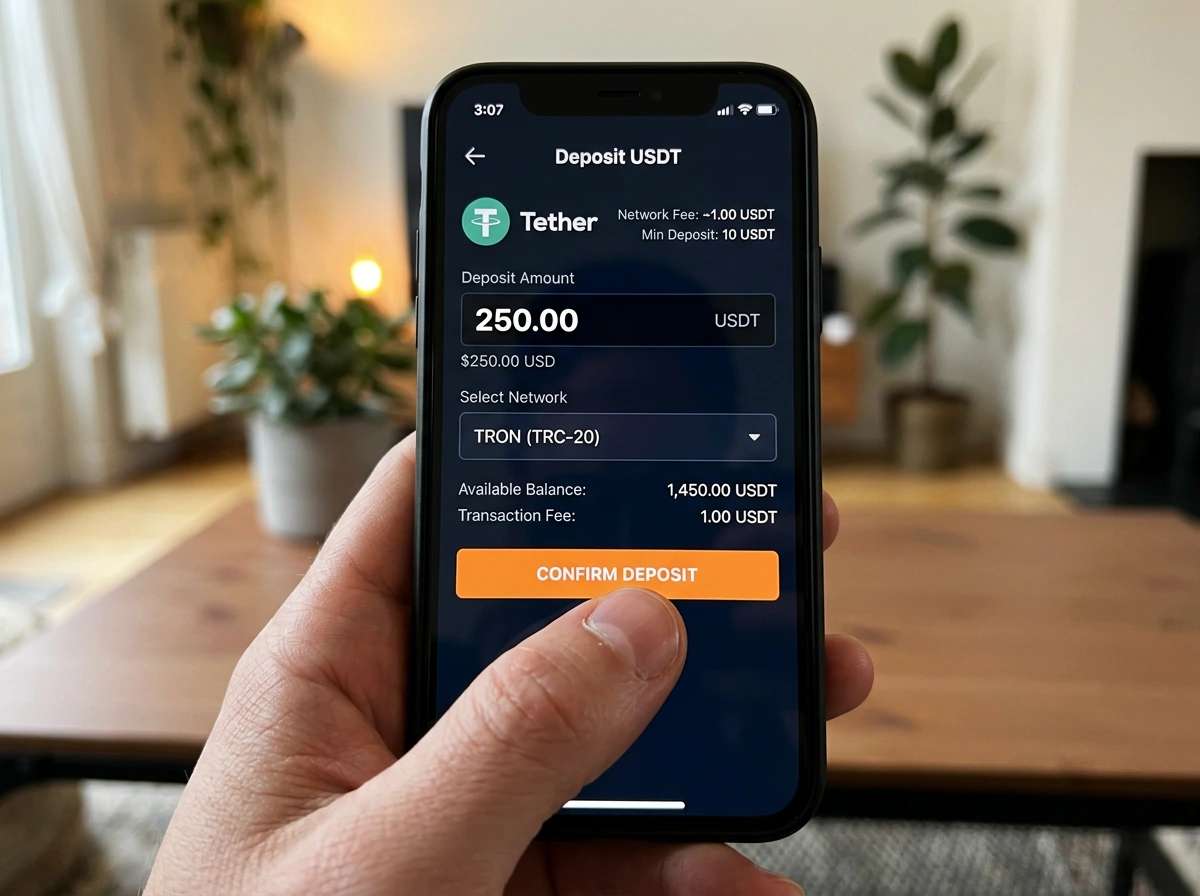
A punter messaged me last year asking why his 5 USDT deposit was rejected at a crypto sportsbook that advertised “no minimum deposit.” Turns out the platform had no minimum on paper, but the blockchain network fee for his ERC-20 transfer was 4 USDT – making the effective minimum 9 USDT just to get 5 into his account. That gap between advertised limits and practical limits is something I see constantly, and it trips up newcomers more often than any other technical detail in USDT betting.
Deposit limits at crypto sportsbooks operate on three layers: the platform’s stated policy, the blockchain network’s fee structure, and the verification tier of your account. Understanding all three determines what you can actually deposit and withdraw, not just what the promotions page claims.
Minimum USDT Deposits at Crypto Sportsbooks
Most crypto sportsbooks set their minimum USDT deposit between 5 and 20 USDT, with the majority landing at 10 USDT. That number is the platform’s threshold – the smallest amount they will credit to your betting account. But the actual minimum you need to send is always higher, because you need to cover the network fee on top of the deposit amount.
On TRC-20, where transfer fees run between $0.81 and $8.45, a 10 USDT minimum deposit requires you to send somewhere between 10.81 and 18.45 USDT from your wallet. The lower end applies if your wallet has staked TRX for energy; the higher end hits fresh wallets with no energy reserves. On ERC-20, the calculus shifts further – a 10 USDT deposit during moderate Ethereum congestion might cost 5 to 15 USDT in gas, making the effective minimum 15 to 25 USDT. The deposit amount reaches your sportsbook account; the fee does not.
This is why I always recommend TRC-20 for smaller deposits. If you are funding your account with 50 USDT or less, the network fee on ERC-20 can represent a meaningful percentage of your bankroll. On TRC-20, even the worst-case fee is under 20% of a 10 USDT deposit. On ERC-20 during congestion, the fee can exceed the deposit itself.
A handful of platforms have responded to this by eliminating minimum deposits entirely for TRC-20 transactions, accepting any amount above zero. In practice, depositing less than 5 USDT is rarely worth the network fee, but the flexibility is there for punters who want to test a platform with minimal financial exposure before committing a larger bankroll.
Maximum Bet Limits for USDT Wagers
Maximum deposit limits at USDT sportsbooks are surprisingly high compared to fiat equivalents – and maximum bet limits are where the real variation lives.
On the deposit side, most crypto sportsbooks accept single deposits of 10,000 to 100,000 USDT without requiring additional verification beyond standard KYC. Some platforms have no stated upper limit, processing deposits of any size through the blockchain. The practical ceiling is determined by your wallet balance and the platform’s hot wallet capacity, not by a policy number on a terms page.
Bet limits are a different story. Each market at a sportsbook carries its own maximum stake, and these vary by sport, league, market type, and how close you are to the event start time. A head-to-head market on a major AFL match might accept bets up to 5,000 USDT, while a player prop on a mid-week NRL fixture might cap at 200 USDT. These limits are not always displayed upfront – you discover them when you enter a stake that exceeds the maximum and the platform reduces it to the cap.
The limits also tighten for live betting. In-play maximum stakes are typically 30% to 50% of the pre-match maximums, because the platform is managing real-time risk as odds shift. If you place a 1,000 USDT pre-match bet on an AFL match without issue, do not assume you can place the same stake on the same market once the match is live. The in-play cap will be lower.
Accumulator and multi-bet limits add another dimension. Most platforms cap the total potential payout on a multi rather than the stake – a common cap is 50,000 to 250,000 USDT in potential winnings. If your multi’s calculated payout exceeds the cap, the platform will either reduce your stake or reject the bet.
VIP and High-Roller Limits for Tether Bettors
With the average Australian punter spending roughly $1,910 per year on gambling, high-roller territory starts well above what most bettors need to think about. But if you are wagering significant USDT volumes, understanding VIP limit structures matters.
Crypto sportsbooks typically operate tiered VIP programmes that unlock higher deposit ceilings, increased bet maximums, faster withdrawal processing, and personal account management as your volume grows. Entry thresholds vary, but I have seen programmes that activate at cumulative deposits of 5,000 USDT and scale through tiers up to 100,000 USDT or more.
The most valuable VIP benefit for high-volume USDT bettors is not the increased limits themselves – it is the reduced withdrawal processing time. VIP accounts at the better crypto sportsbooks get priority withdrawal processing, which can cut cashout times from hours to minutes. When you are moving five-figure USDT amounts, having that money back in your wallet quickly reduces your counterparty exposure to the platform.
Some platforms also offer negotiable limits for VIP accounts. If the standard maximum on an AFL head-to-head is 5,000 USDT and you want to place 15,000, a VIP manager can sometimes approve an increased limit for that specific bet. This is not guaranteed and depends on the platform’s risk appetite for the market in question, but the option exists at the operator tier that caters to serious punters.
One consideration specific to USDT high rollers: large deposits from new or unverified accounts trigger enhanced due diligence at most platforms. If you plan to deposit significant amounts, complete full KYC verification first and build a transaction history with smaller deposits before scaling up. A first-ever deposit of 50,000 USDT from an unverified account will almost certainly be held for manual review, and the processing delay can be substantial. For the broader perspective on how USDT bonuses interact with deposit tiers, the bonus guide covers wagering requirements that scale with deposit size.
Setting Limits for Your Own Protection
Deposit limits are not only about what the platform allows – they are also about what you set for yourself. Most USDT sportsbooks offer self-imposed deposit limits as a responsible gambling tool, letting you cap your daily, weekly, or monthly deposit total at an amount you choose. Once set, these limits cannot be increased instantly – a cooling-off period of 24 to 72 hours applies before any increase takes effect.
I use self-imposed deposit limits on every platform I bet through, not because I have a gambling problem but because they enforce the bankroll management discipline that separates sustainable betting from impulse-driven activity. Setting a weekly deposit cap forces you to plan your wagering budget in advance rather than chasing losses with additional deposits in the heat of the moment. The blockchain does not care about your emotional state – it will process any deposit you authorise. The limit is the guardrail you build for yourself.
Can I set my own USDT deposit limits for responsible gambling?
Yes. Most crypto sportsbooks provide self-imposed deposit limit tools that let you cap your daily, weekly, or monthly deposits at a chosen amount. Once set, reductions take effect immediately, but increases require a cooling-off period – typically 24 to 72 hours – before they activate. These tools function independently of the platform’s own maximum deposit thresholds and are designed to help you maintain control over your betting budget.
Do deposit limits change based on KYC verification level?
At many platforms, yes. Unverified or partially verified accounts often face lower deposit and withdrawal ceilings than fully verified accounts. Completing KYC – submitting identity documents and proof of address – typically unlocks higher limits across both deposits and withdrawals. Some platforms also require enhanced verification for single transactions above a certain threshold, regardless of your account’s overall verification status.
The wider context is in the USDT betting guide.
How fast the money comes back: withdrawal speed.