
Is Tether Betting Safe? Security Risks and How to Protect Your USDT
 Available in AU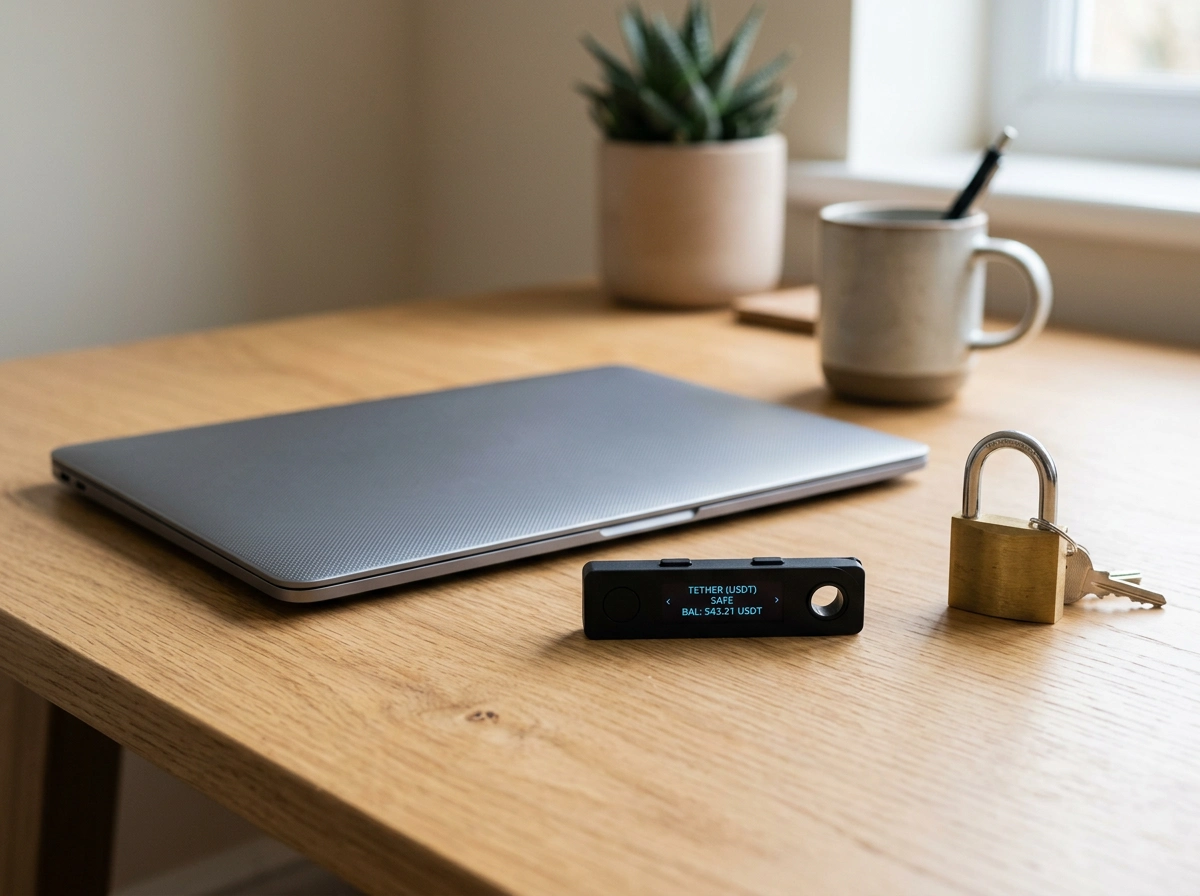
I lost 320 USDT in 2020 to a crypto sportsbook that vanished overnight. No warning, no announcement, no recourse. The domain went dark, the Telegram group was deleted, and my deposit was gone. That experience taught me more about USDT betting security than any guide I had read up to that point, and it shaped every risk framework I have applied since.
Tether betting is not inherently dangerous – it is a payment method, not a risk factor. But the ecosystem around it introduces specific hazards that fiat betting does not, and understanding those hazards is what separates punters who lose money to operational failures from those who manage their exposure properly. ACMA has blocked 1,296 illegal gambling sites since 2019, and the offshore USDT platforms Australian punters use exist outside that enforcement perimeter. Your safety depends on your own due diligence.
Platform-Level Risks for USDT Bettors
When Tether CEO Paolo Ardoino described redeeming $7 billion in 48 hours – 10% of reserves, with $20 billion following in the next 20 days – he was demonstrating liquidity that no bank could match. The contrast between Tether’s institutional resilience and the fragility of some platforms that accept it could not be sharper.
The primary platform risk is insolvency. Offshore crypto sportsbooks operate with varying levels of capitalisation, and there is no deposit insurance equivalent for your USDT balance. When a platform fails, your funds are an unsecured liability in whatever insolvency process applies in their licensing jurisdiction – which may be minimal. The $320 I lost came from trusting a platform that had been operating for eight months and had processed hundreds of bets without issue. Longevity is not proof of stability.
Regulatory risk is adjacent. ACMA actively blocks unlicensed gambling sites accessible to Australians, and a platform that is available today may be blocked tomorrow. DNS-level blocking does not affect your account balance directly – the platform still exists – but it complicates access and can create withdrawal delays while you navigate the block using alternative methods. The Polymarket block demonstrated that ACMA is willing to target crypto-adjacent betting platforms, not just traditional casinos.
Operational risk covers everything from withdrawal delays to account freezes. Some platforms impose undisclosed limits on withdrawals after large wins, slow-walk payouts during periods of financial stress, or apply retroactive terms changes that void bonuses or winnings. These practices are not universal, but they are not rare either. I maintain active accounts at multiple platforms specifically so that no single operator holds more than 20% of my total USDT betting bankroll at any time.
Protecting Your USDT Wallet and Seed Phrase
Your wallet is the one piece of the USDT betting chain that you fully control. Every other element – the exchange, the sportsbook, the blockchain network – involves some degree of trust in a third party. Your wallet, secured by your seed phrase, is yours alone. Losing control of it means losing everything it holds.
A seed phrase is a sequence of 12 or 24 words generated when you create a new wallet. Anyone who has those words can reconstruct your wallet and transfer every token in it. Store your seed phrase offline – written on paper or stamped on metal, never in a digital file, never in cloud storage, never in a screenshot. I keep mine in a fireproof safe, and I have a backup stored with a trusted family member who does not know what it is for.
Never enter your seed phrase into any website, form, or application other than your wallet software during initial setup or recovery. No legitimate sportsbook, exchange, or support agent will ever ask for your seed phrase. Any request for it is a scam, full stop. The most common attack vector I see in crypto betting communities is fake support agents in Telegram or Discord groups who offer to “help with a withdrawal issue” and ask for your seed phrase to “verify your wallet.” The moment you share it, your funds are gone.
Use a dedicated wallet for betting – separate from any wallet that holds long-term savings or other crypto assets. If your betting wallet is compromised, only the funds allocated for wagering are at risk. This compartmentalisation is basic operational security, and it costs nothing to implement.
Common Network Mistakes That Cost Bettors Money
The scale of network-related errors is difficult to overstate. Tether has frozen more than $3.29 billion in USDT across 7,000+ blocked addresses in cooperation with law enforcement – but individual bettors lose funds to their own mistakes far more often than to enforcement actions.
The most expensive mistake is sending USDT to the wrong network. Your sportsbook generates a deposit address for a specific blockchain – TRC-20, ERC-20, or BEP-20. Sending TRC-20 USDT to an ERC-20 address, or any other network mismatch, results in permanent fund loss. The blockchain processes the transaction, but the receiving address does not recognise the tokens on its network. There is no customer support that can reverse it.
Copying the wrong address is the second most common error. Clipboard-hijacking malware exists that detects cryptocurrency addresses in your clipboard and replaces them with an attacker’s address. You copy the sportsbook’s deposit address, paste it into your wallet, and – without noticing the substitution – send your USDT to a thief. The defence is simple: always visually verify the first and last five characters of the pasted address against the address displayed on the sportsbook page before confirming.
Sending USDT with insufficient gas or energy is a less catastrophic but still frustrating mistake. On TRC-20, a transfer without enough bandwidth or energy will fail, and the tokens return to your wallet after a delay. On ERC-20, setting your gas limit too low causes the transaction to fail, and you lose the gas fee without the transfer completing. Keep a small buffer of TRX or ETH in your wallet to cover network fees.
Pre-Bet Safety Checklist for USDT Wagering
After years of refining my approach, I run through a mental checklist before every USDT betting session. These are not optional steps – they are the minimum standard for operating safely in an ecosystem where your protection is your responsibility.
Verify the platform’s licence before depositing. Check the licence number on the regulator’s website, not just the badge on the sportsbook’s footer. Curaçao, Malta, and Kahnawake all maintain public licence registries. If the platform does not display a verifiable licence, do not deposit. For a deeper dive into what Australian gambling law means for offshore USDT platforms, the legal guide covers the regulatory landscape in detail.
Test the withdrawal process with a small amount before depositing your full bankroll. Send 10 to 20 USDT, place a bet, and withdraw the balance. Measure the withdrawal processing time and confirm the funds arrive in your wallet. A platform that processes a small test withdrawal promptly is far more trustworthy than one you have never tested under real conditions.
Confirm the deposit network before every transaction. Do not rely on the default selection in your wallet app. Manually select the network that matches the sportsbook’s deposit page, verify the address visually, and double-check the network indicator before confirming. This takes ten seconds and prevents the single most expensive mistake in crypto betting.
Set a session bankroll limit. Decide before you start how much USDT you are willing to risk in this session, and do not deposit more regardless of outcomes. The absence of traditional banking friction in crypto betting – no 3-day bank transfer delay, no credit card cooling-off period – means there is no built-in pause between the impulse to chase losses and the ability to act on it. Your self-imposed limit is that pause.
Keep records. Document every deposit, withdrawal, bet, and outcome with dates, amounts, and transaction hashes. Beyond being essential for Australian tax reporting – ATO treats USDT as a capital gains tax asset – this record is your evidence in any dispute with a platform. Without it, you have no proof of what you deposited, wagered, or won.
Can Tether freeze my USDT if I use it for betting?
Tether has the technical ability to freeze specific wallet addresses, but this capability is used in cooperation with law enforcement for criminal investigations – not for targeting individual bettors. Tether has frozen over $3.29 billion across 7,000+ addresses, but these actions relate to fraud, money laundering, and sanctions evasion. Standard betting activity does not trigger address freezing. Your greater risk is the platform itself, not the stablecoin issuer.
How do I recover USDT sent to the wrong network?
In most cases, you cannot. Sending USDT on one blockchain network to an address on a different network results in permanent fund loss. The tokens exist on the blockchain but are inaccessible at the receiving address. Some centralised exchanges may be able to recover cross-network deposits sent to their addresses, but sportsbooks generally cannot. Prevention is the only reliable strategy – verify the network before every transfer.
Are hardware wallets necessary for Tether betting?
Not strictly necessary, but recommended if you hold significant USDT balances. A hardware wallet like Ledger or Trezor stores your private keys offline, making them immune to malware, phishing, and remote attacks. For small betting bankrolls, a mobile software wallet like TronLink or Trust Wallet is adequate, provided you follow basic security practices – unique passwords, seed phrase stored offline, no seed phrase entry on websites. The right choice depends on how much USDT you are protecting.
The full picture is in the Tether betting guide.
How platforms are regulated: licensing explained.