
Tether Betting Deposit Methods: All the Ways to Fund Your USDT Account
 Available in AU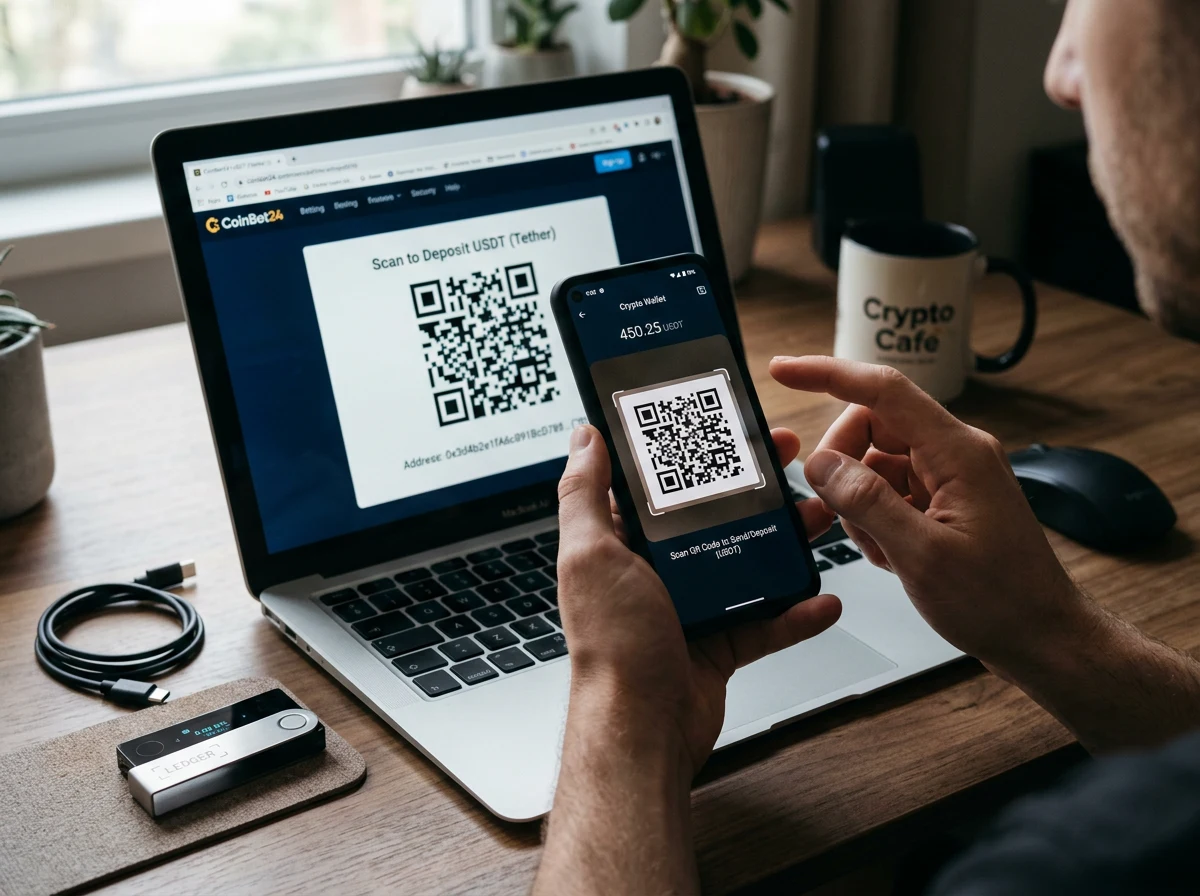
The first time I deposited USDT at a sportsbook, I spent twenty minutes staring at a deposit page trying to figure out whether to use my exchange, my wallet, or the QR code that the platform was showing me. All three routes lead to the same destination — USDT in your sportsbook balance — but the differences in speed, cost, and security between them are large enough to matter. After hundreds of deposits across dozens of platforms, I have strong opinions about which method to use and when.
USDT has been called “the most efficient tool for modern sports betting” for good reason — the infrastructure for moving it is fast, cheap, and accessible from any device. But the efficiency depends on how you move it. A poorly chosen deposit route adds cost and time that the currency itself was designed to eliminate.
Direct Wallet Transfers to Betting Sites
Sending USDT directly from your personal wallet — TronLink, MetaMask, Trust Wallet, or a hardware wallet — to a sportsbook’s deposit address is the method I use for the vast majority of my deposits. It is the most direct route, it gives you full control over the transaction, and it creates the cleanest record for your own tracking.
The process: log into your sportsbook, navigate to the deposit section, select USDT on your preferred network (TRC-20 for lowest fees), and copy the deposit address. Open your wallet app, paste the address, enter the amount, and confirm the transaction. On TRC-20, fees run between $0.81 and $8.45 depending on your wallet’s energy balance. The deposit confirms in under a minute and credits to your sportsbook account.
The security advantage of wallet transfers is meaningful. Your wallet is under your control — secured by your private key and seed phrase, protected by biometric authentication or a PIN. The transaction goes directly from your wallet to the sportsbook with no intermediary. There is no exchange processing delay, no third-party service holding your funds in transit, and no additional KYC verification at the point of deposit.
The downside is that you need USDT in your wallet before you can deposit. If your USDT is on an exchange, you first need to withdraw it to your wallet and then send it to the sportsbook — two transactions instead of one, with two sets of network fees. For small deposits, that double fee can be disproportionate. For regular bettors who keep a USDT balance in their wallet, the single-transfer deposit from wallet to sportsbook is the most efficient path.
Sending USDT Directly From an Australian Exchange
Tether holds roughly 59% of the global stablecoin market, and every major Australian exchange offers it. Sending USDT directly from your exchange account to a sportsbook deposit address is the fastest route from AUD to active bet — you buy USDT on the exchange and send it straight to the platform, skipping the personal wallet step entirely.
CoinSpot, Swyftx, Binance Australia, and Independent Reserve all support direct USDT withdrawals to external addresses on TRC-20 and ERC-20. The exchange charges its standard withdrawal fee — typically 1 USDT on TRC-20 — and the transfer processes through the exchange’s withdrawal pipeline before hitting the blockchain.
The speed of exchange sends varies. Automated withdrawals at some exchanges process within minutes. Others batch withdrawals and process them every few hours or require manual approval for new withdrawal addresses. The first time you send to a new sportsbook address, the exchange may flag it for additional verification, adding hours to the process. Subsequent sends to the same address are typically faster because the exchange recognises it as an approved destination.
I use this method when I need to fund a sportsbook quickly and my wallet balance is empty. The trade-off is convenience versus control — you are relying on the exchange’s processing time, and the exchange can see the destination address (though it does not know the address belongs to a sportsbook). For punters who prioritise the simplest possible pipeline from AUD to sportsbook, the direct exchange send is hard to beat.
Third-Party Crypto Payment Processors
Some crypto sportsbooks integrate third-party payment processors that handle the deposit flow on the platform’s behalf. Instead of generating a raw blockchain deposit address, these platforms present a payment interface from a processor like MoonPay, Transak, or a crypto-specific payment gateway. You buy USDT through the processor using a credit card, bank transfer, or other fiat method, and the processor sends the USDT to the sportsbook on your behalf.
This method targets punters who do not already hold USDT and want to convert fiat to crypto within the sportsbook’s interface rather than setting up an exchange account separately. It is the lowest-friction entry point for newcomers — no exchange registration, no wallet setup, no address copying. You deposit fiat, the processor converts it to USDT, and the sportsbook credits your balance.
The cost, however, is significant. Third-party processors charge fees of 3% to 7% on the transaction — dramatically more than the sub-1% cost of buying USDT on an Australian exchange and sending it directly. For a 500 USDT deposit, a 5% processor fee costs 25 USDT. The same 500 USDT purchased on CoinSpot and sent via TRC-20 costs roughly 6 USDT in total fees (exchange spread plus withdrawal fee). That 19 USDT difference on a single transaction compounds over a season of deposits into hundreds of USDT in unnecessary costs.
I recommend third-party processors only for a single test deposit when you want to try a platform with minimal setup. For any ongoing betting activity, setting up an exchange account and wallet pays for itself within two or three deposits. The step-by-step betting guide walks through the complete exchange-to-wallet-to-sportsbook pipeline that eliminates the need for expensive third-party processors.
Choosing the Right Method for Your Situation
The best deposit method depends on three variables: how often you deposit, how much you deposit, and how much setup you are willing to do upfront.
Occasional bettors who deposit a few times per year are adequately served by direct exchange sends. Buy USDT on your Australian exchange when you need it, send it to the sportsbook, bet, and withdraw winnings back to the exchange. The pipeline is simple, the fees are low, and the overhead is minimal.
Regular bettors who deposit weekly or more should use a personal wallet as a staging point. Keep a USDT balance in TronLink or Trust Wallet, top it up from your exchange periodically, and deposit from the wallet to sportsbooks as needed. This approach reduces the number of exchange withdrawals (and their associated fees), gives you faster deposit execution, and provides the flexibility to split funds across multiple platforms from a single wallet.
High-volume bettors should add a hardware wallet to the chain for any USDT they are not actively wagering. Hold your long-term betting reserve on a Ledger or Trezor, transfer to your hot wallet (TronLink/Trust Wallet) in amounts matching your current session’s budget, and deposit from the hot wallet to the sportsbook. This layered approach limits the funds exposed to any single point of failure — if the sportsbook, the hot wallet, or the exchange is compromised, only a fraction of your total bankroll is at risk.
Can I deposit USDT via a QR code at a sportsbook?
Yes. Most USDT sportsbooks display a QR code alongside the text deposit address on their deposit page. Scanning the QR code with your mobile wallet app auto-fills the address and sometimes the amount, reducing the risk of address entry errors. The QR code encodes exactly the same address as the text string — it is a convenience feature, not a different deposit method. Always verify the network matches before confirming.
Is it safer to send USDT from a personal wallet or exchange?
Both are secure if you verify the deposit address carefully. A personal wallet gives you full control over the transaction and does not involve a third party. An exchange send routes through the exchange’s withdrawal system, which may include automated security checks that add a small delay but also an extra verification step. The primary safety consideration for either method is confirming the correct network and address before sending. For ongoing betting, a personal wallet offers faster deposits and greater independence from exchange processing times.
The full picture is in the Tether betting guide.
What each method costs: USDT transaction fees.